This whitepaper explores the prospects of using automation for streamlining operations in the healthcare industry. The paper highlights the challenges plaguing the industry in the current environment, the audience’s pain points regarding healthcare facilities, key issues faced by healthcare professionals, areas in which automation can profit the healthcare industry, challenges in implementing automation in the healthcare industry, opportunities and use cases.
02 – Introduction
Let us take a look into the healthcare industry and how it is adopting marketing automation for its daily (administrative) tasks. Healthcare institutions deal with various manual, paper-based tasks such as patient onboarding, billing, claims management, patient data, prescriptions, patient discharge and more. As the number of people seeking medical assistance is increasing by the day, the volume of such paperwork grows as well. The more time healthcare professionals spend completing these tasks, the less time they have to tend to patients in need – thus putting both the patient and the institution at risk. The only way for the global healthcare system to tackle this increasing demand for medical services is by adopting healthcare automation solutions that will conduct these administrative tasks for the medical staff. The benefits of automation in healthcare would be paramount for the future of healthcare industry.
03 – An Overview of Key Terms
Key Terms Related To Healthcare
01
Claim:
A request put in by the patient for payment by their health insurance provider of medical expenses covered by the insurance policy.
02
Co-payment:
A set amount that the patient is required to pay each time they avail a healthcare service.
03
Inpatient:
A patient who requires hospitalisation.
04
Outpatient:
A patient who receives medical care without being admitted to a medical facility.
05
Rehabilitation services:
Medical or healthcare services that help a patient get back or improve skills or functioning necessary for daily living that have been compromised or lost due to a prior sickness, injury or accident.
Key Terms Related To Marketing Automation
06
Behaviour-based marketing automation:
Behaviour-based marketing automation refers to a process or system that triggers marketing communication activity such as emails based on on-site and off-site user activity.
Lead or demand generation is the process of creating content that caters to the audiences’ needs, gathers their information and eventually converts them into customers.A patient who requires hospitalisation.
09
Conversion rate:
Conversion rate is the percentage of website visitors, who have actually converted into customers for your business.
10
Workflow:
An automated programming is the process of automating your marketing efforts – from triggering an email when a visitor fills out a form — to changing a customer’s lifecycle stage and all activities that take place in between.
04 – Automation In Healthcare And Its Benefits
Automation has enabled many industries to streamline processes, cut costs, mitigate risks and increase the overall productivity and efficiency of the industry. Healthcare can also be an equal beneficiary. Using automation for everyday tasks will lead to increased patient satisfaction, lower costs, less risk of non-compliance and better quality of medical services. It can take care of any and almost all administrative tasks such as patient appointment and scheduling, claims settlements and management, delivering patient discharge instructions and so on.
Automation in healthcare allows medical practitioners to accomplish more tasks in their regular shift timings through automated processes that require low levels of manual intervention. This translates to less overtime, higher productivity and minimum errors that ultimately lead to fewer payouts due to medical mistakes.
Automation Also Helps With:
Efficient scheduling
Scheduling appointments in the healthcare industry is not easy. It involves matching the right patient to the right medical professional in the right location at the right time, while avoiding scheduling conflicts. Automated scheduling software is programmed to avoid timing overlaps, reschedule in cases of emergencies as well as send out timely reminders to customers.
Minimised errors
By automating small and big tasks like data download and transfer, patient scheduling and outpatient procedures that cannot afford repeated mistakes, medical institutions can greatly increase the efficiency of their administrative functions and eventually patient treatment due to the reduced risk of errors.
Easy data access & transfer
Data-related software helps healthcare providers automate data collection, storage, access and transfer. These healthcare automation solutions instantly add patient data to the main database as soon as it is entered into the system, which can then be accessed by all enabled professionals and shared between different departments seamlessly. This helps avoid bottlenecks in a patient’s treatment journey that requires quick diagnosis and the involvement of multiple departments and specialties.
Increased patient satisfaction
When processes are automated, the hospital staff experience reduction in overall stress and are able to direct their time and effort into the more important aspects of patient treatment such as personalised patient care, higher attention to patients and reducing wait time.
Precise diagnostics
Healthcare automation solutions have helped improve the interpretation of medical images, leading to higher precision and reduced chances of human error in patient diagnostics. Not only can AI scan medical images much quicker than humans, it also offers much quicker diagnostics, which can prove to be a real saviour in cases where early intervention is required.
Enhanced practice productivity
By automating documentation, inventory management, patient-doctor tracking with technology, healthcare professionals are able to cut down significant amounts of time dedicated to these tasks and redirect them to actual skilled work. This reduces stress and burnout, boosts productivity and increases overall job satisfaction.
Reduced operating costs
With increased efficiency in everyday tasks and reduced manual labour, hospitals need not overwork their staff, leading to less overtime expenses. Further, when professionals are not involved in manual tasks, it improves their ability to care for their patients. In addition, it leads to lower levels of stress as well as fewer diagnostic and surgical errors.
While we talk of marketing automation and its benefits in the healthcare industry, the tools that come in handy for automation are plenty. When software, AI, and robots take over menial healthcare processes, it creates a monumental difference in the level of care and attention given to patients and everyone in the system.
The situation of the global healthcare industry is at quite a contrast in 2022. On the one hand there are qualified medical professionals, advanced medical services and well-furnished clinics and hospitals. On the other hand, there is the growing ageing population trying to find their place in the complex future of healthcare as well as the rising cost of medical services. Amidst all this, it is no secret that millions of lives depend on how systematically the healthcare industry can tackle these challenges and minimise this contrast to deliver efficient functioning and quality medical services.
Let’s glance over the major challenges faced by the healthcare industry:
Cybersecurity:
The Covid-19 pandemic brought to the forefront exactly how vulnerable sensitive patient data is. As more and more healthcare services establish their presence online with telehealth, the associated risk of data breach also increases significantly. When such breaches occur, not only is patient data under threat, but there is also a substantial penalty to be paid to regulatory authorities if any violations are discovered.
Payments and invoicing:
As the number of patients increases, so do their bills and consequently, revenue for the medical institution, which makes it crucial for hospitals to ensure timely patient collections and settlements.
The challenge is actually investing in invoicing and processing systems in-house. Not only does it include lengthy negotiations with different payment processors, but also the cost of infrastructure as well as the ongoing administrative costs of keeping these systems moving.
Big data:
Each day as more healthcare data is being generated, it is scattered across various systems and multiple parties such as payment providers, patients, insurance companies and medical institutions. This means that there is no single source of end-to-end patient data available to hospitals and clinics that can be used to optimise patient experience. When patients switch to a different hospital or clinic, the medical practitioner mostly depends on the patient to reveal their medical records and thus not all data is accumulated and transferred properly from one system to another.
Patient experience:
Patients are demanding a streamlined process wherein they can self-service most aspects of the process, from enquiries to bill payments and more. This has made centralising and automating processes the absolute need of the hour.
The healthcare sector has become highly competitive today. The more options patients are provided with, the choosier they become with their selection. Considering the rising prices of healthcare services, it is no surprise that patients now expect top-notch service from their provider. This makes attracting and retaining patients a big challenge.
Rising costs:
Healthcare costs are increasing by the minute, from equipment to insurance rates to medicines. Healthcare professionals and institutions are constantly on the lookout for lower cost alternatives and more efficient operational facilities. This helps them deliver affordable patient care and increase overall patient satisfaction – however, currently, it is a major challenge faced by healthcare professionals.
What are the audience’s pain points?
Healthcare is an industry that is flourishing tremendously, especially in terms of aspects like technological advances, remote e-health services, digitisation of processes and so on. However, patient frustrations are also on the rise, considering that medical institutions often find themselves overloaded and cannot find the time to provide quality customer service.
Let’s take a look at the common issues faced by medical consumers.
Affordable medical services
From drugs to treatments and surgeries, no service in healthcare costs less than a few lakh rupees, making it difficult for a lot of consumers to afford them, especially the uninsured. The modern man’s lifestyle has contributed greatly to his success but also his declining health, leading to a sharp increase in ailments and diseases. Now more than ever, the healthcare consumer is in need of affordable medical services. While it may not be possible to bring down all kinds of expenses, it is possible to minimise costs by automating time-consuming tasks.
Services from medical professionals
A survey by Qualtrics revealed another audience pain point – services from the medical staff present in the hospital or clinic.
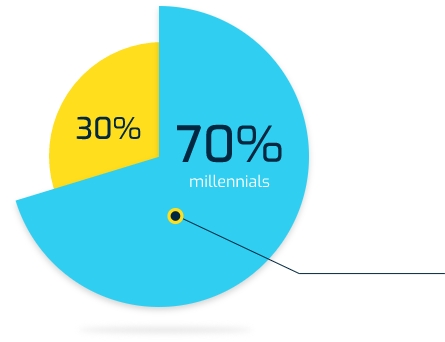
While baby boomers are not that bothered with unfriendly behaviour, millennials have stated that they are 70% more likely to switch healthcare providers for this reason. Similarly, a large portion of healthcare consumers feel that they are treated more like case files and less like humans, which hugely affects their overall experience with the medical service provider.
Switch healthcare providers due to poor overall experience.
Poor communication
A majority of patients have stated poor communication and repeatedly having to explain their condition to several different parties as a major point of frustration, especially in emergency rooms and urgent care clinics. Due to this pain point, many consumers have reported that they feel uncomfortable questioning their provider even in cases where the latter has jumped to conclusions without having conducted proper examinations.
A few examples of tools that can benefit healthcare:
Cloud computing Cloud computing platforms help medical institutions monitor and improve their operations with the changing needs of their consumers. Automation platforms enable healthcare professionals to conduct processes such as patient care coordination, clinician management, member services, compliance and more.
CRM Systems CRM systems allow healthcare institutions to manage complex business processes and build applications for their changing business needs. They help in areas such as customer outreach, marketing campaign management, contact management, account management and more.
E-prescription software Electronic prescriptions allow physicians to not only hand out prescriptions but also track old ones, cancel or renew them. They also allow direct contact and order placement with associated pharmacies without errors that further helps save valuable time.
Image analysis Medical imaging and analysis software is used to accurately visualise the results from CT scans or MRI scans and can help radiologists in a fast-paced environment. Imaging software is generally accompanied by machine learning diagnostic tools that can process large volumes of data and leave the doctor to focus on more immediate matters.
Billing software Healthcare billing software simplifies and automates the process of billing end-to-end, thus saving considerable amount of time, money, and manual effort. It can be synchronised with EHR software to gain more information on a patient’s medical activities and billing records.
Electronic health records EHR software is a system that automatically collects patient data. It allows for digital storage and accessibility to patient information, doctor recommendations and medical history. Two most common types of EHR software are Electronic Medical Record and Electronic Patient Record.
EHRs offer a number of benefits that contribute to higher levels of efficiency in hospital operations, such as:
Electronic storage of records eliminates the risk of misplacement, theft, alteration, or damage of sensitive patient data
These records can connect medical professionals regardless of time and distance, throughout the duration of the patient’s treatment
It enables real-time updating of patient information
They offer billing and payment tools for seamless processing
Cloud-based EHR systems are easily scalable and can accommodate growing volumes of patient data
How automation helps in managing patient confidentiality?
Patient confidentiality is one of the most fundamental components in a healthcare system. Given the amount of sensitivity of patient data that is generated by medical institutions on a daily basis, patient confidentiality has become a growing concern in the industry. Not only does patient information include personal data such as names, address, birth date, financial account details, etc. that can be used for identity theft and other fraud, but also private health-related information such as medical history, disabilities, mental health concerns and so on.
While efficient lines of communication are being created for the convenience of physicians for them to deliver high-quality patient care, hospitals and clinics must ensure that this information is kept safe at all times.
Automation through blockchain makes use of cryptography for safety, which is infinitely more secure than physical storage of records. Blockchain stores records and transactions in a chain of blocks – each block is connected to the ones before and after it and therefore, it is virtually impossible to tamper with data stored in blockchain.
Further, security is achieved through stringent implementation of cybersecurity frameworks, secure coding practices and multiple security testing processes to obtain end-to-end protection from threats like data breaches and online frauds.
Holistic satisfaction by automation
Improved patient care
Along with patient care, factors such as functional efficiency and seamless patient communication are just as important in delivering a satisfactory patient experience. With automation, medical institutions can not only share but also update large volumes of critical patient data in a digitised fashion in real time, thus eliminating human errors. Further, physicians can also be alerted if a patient misses or deviates from their treatment process with the help of automation.
Seamless patient experience
Digital process automation allows patients to experience smooth admission, follow-ups, check-ups, post-op appointment scheduling and more. It also enables medical institutions to schedule reminders for patients, free up medical staff and reduce the chances of no-shows and unscheduled appointments.
Actionable insights
Medical institutions deal with a barrage of information every day. To gain any insights from this data, systematic collection and organisation of data is required. While this is not easily possible with manual record storage, valuable healthcare insights can be effectively gleaned from digital patient and hospital records. This data can further prove to be highly valuable for enhancing efficiency, streamlining research projects and improving everyday operations.
Automation: The need of the hour in healthcare
Clinical research is the cornerstone of a robust healthcare industry. It is only with constant innovations and developments that we can cater to the changing needs of consumers. However, research, too, presents its own share of challenges. Let’s see what they are:
Development of new drugs
The approximate cost of developing a new drug by means of clinical trials is about $1.3BN. However, this number can range anywhere between $1BN to $3BN, depending on factors like capital costs, preclinical expenses, development of new equipment and so on. These high numbers can often deter researchers from conducting trials to develop new drugs.
Failures and delays
A recent study by Jama Internal Medicine revealed that a whopping 54% of research involving novel therapeutics fail due to efficacy issues. It was also found that only 6% of clinical trials get completed on time, while over 80% are delayed due to subject recruitment and retention issues – yet another reason that dissuades researchers from conducting groundbreaking research.
Lack of training and support
The complexity of medical research is ever-increasing, which means that medical professionals and administrative staff involved in the research are often not trained enough to participate in the research. Moreover, lack of administrative support for activities like data management and clerical tasks results in the loss of valuable financial resources. This overburdens the medical researchers and causes them to either drop out of or refuse to undertake new research projects.
05 – Challenges In Implementing Automation In Healthcare
Rising costs in implementing automation
To combat rising healthcare costs, medical institutions are now using insights from big data and implementing a transition from the traditional fee-for-service pricing model to value-based, bundled and risk-sharing pricing models. In this new landscape, healthcare is facing tremendous pressure to maintain affordable costs while increasing the quality of care provided to patients. The only way to do this is by implementing automation.
However, this is easier said than done. Implementing automation technology is an expensive affair. It requires hordes of different software and physical equipment to operate them. Moreover, the medical staff that has been working in traditional systems for a long time require training to handle the new automated tasks efficiently or they may end up creating more roadblocks than mitigating them. While automation is a huge cost saver in the long run, it requires a lot of capital upfront for purchasing and implementing the necessary technology, as well as for its maintenance, upkeep and upgrades along the line.
Equal access to digital health
Digital access and literacy in India are yet to reach 100%. Access to digital devices and the internet is a crucial requirement for automated healthcare. Consumers who don’t have these facilities cannot make the best of automation, further widening the digital gap.
Data interoperability
When the majority of hospitals and clinics in the data-sharing chain are not automated, the rest are left with data gaps and inefficient processes. Medical practices must be equipped with EHR systems to be able to transfer data across platforms and locations, the absence of which can prove to be a major challenge even for the hospitals/clinics that are functioning on EHR systems.
06 – Opportunities And Use Cases
While it is true that equitable access to digital healthcare is yet to become a reality in the diverse landscape of India’s consumer base, alternative measures can be made for patients with limited access to internet and smartphones. Voice technology is making great strides in the payment and communication sectors, which can be used in areas with limited or no data connectivity. Further, digital illiteracy can be combated with training programs in hospitals and medical centres in such areas.
Data interoperability remains a major point of concern, which can only be remedied with uniform implementation of EHR systems across hospitals. With a one-time investment upfront, healthcare institutions can benefit from substantial cost savings in the long run.
Automation: The need of the hour in healthcare
Pre-implementation planning
Many health process automation implementation programs experience outright failure due to lack of proper planning in the pre-implementation phase. Proper audits must be held company-wide in order to gauge possible disruption that the automation will bring in the existing workflow. There must be a proper implementation strategy in place, with enough resources allocated to training key stakeholders. Varying workflows, digital literacy of the staff, different reporting structures must all be accounted for to identify roadblocks further along the line and ensure high adoption rates.
Build time
Many organisations that have implemented automation have cited major concerns regarding the time required to build automation systems. The answer is to make use of codeless automation programs and platforms that do not strictly require skilled technicians for set-up and implementation. In fact, some simplified automation tools even allow end-to-end recording of processes using a simple button, which is then efficiently automated by the system with minimal errors.
Workflow and revenue cycle analysis
It is important to keep a close eye on how these systems are functioning and whether the practices are being adopted properly. Proper performance metrics must be set that go beyond basic adoption rates. Truly successful automation implementation brings about tangible changes in the existing system such as documentation time, claims denials, staff management and so on.
Knowing what to automate
Currently, a fair amount of guesswork goes into narrowing down on the right areas for automation, which needless to say is not too effective. Identifying potential tangible gains from automation is a major challenge yet to be overcome by the healthcare industry. The solution is to use software that aggregates data and provides data analysis that can further be used to identify the processes to be optimised with automation.
Post-implementation training
Often, automation fails to reach its full potential because of incorrect use of systems by the staff and even resistance to adopt new practices. Considering that a number of different departments are involved in a medical institution, it is important to customise the automation training according to each department, as opposed to a “one-size-fits-all” approach. The implementation team can help curate tailored guides for the staff belonging to different departments, so they can leverage the automation systems.
07 – Use Of Chatbots
Role of chatbots in communicating with patients, emails and more:
In the last two decades, monumental advances have been made in the areas of natural language processing and speech recognition, allowing businesses to adopt chatbots for automation and offer multimodal engagement experiences to consumers. As the world moves more and more towards digitisation, consumers prefer communicating in the least possible time and at their convenience, which is something chatbots are enabling.
In the field of healthcare, chatbots have a lot of value to add from monitoring user behaviour to personalising messages. Healthcare Chatbots have allowed medical institutions to create a seamless and easy-to-operate communication experience for their patients. Here’s how:
Scheduling appointments
Medical Chatbots are integrated with the medical institution’s internal system to retrieve information about physician schedules, existing appointments, available time slots and more. With a few standard questions, medical chatbots can schedule as well as cancel or reschedule appointments.
Disseminating information
Chatbots function on algorithms that are based on massive volumes of medical data that includes ailments and diseases, symptoms, markers, diagnostics and recommended treatments. Moreover, public health databases can be synchronised with chatbots, further enhancing its ability to provide accurate information to the patients, whenever required.
Handling insurance enquiries
Some varieties of advanced chatbot software enable medical facilities to provide healthcare resources such as insurance information to patients, settle claims and even help them meet their insurance requirements through the right provider.
Offering mental health services
AI Chatbots can also be trained to provide mental health assistance like mindfulness or even cognitive behavioural therapy to patients with issues such as post-traumatic stress disorder (PTSD), depression, anxiety and more. They can even help patients with autism to train in social skills for important events like job interviews.
Pandemic effect
Covid-19 has tremendously affected the healthcare industry. The tireless efforts of doctors, nurses and other medical professionals were tested at a time when the entire world depended on them for their lives all at once. Amidst this, chatbots have helped ease the pressure to some extent. For instance, the World Health Organisation (WHO) Technology program had developed a chatbot, which could be accessed through WhatsApp Messenger and Facebook. In its first month, it reached over 12 million users through WhatsApp alone.
The pandemic, due to its physical interaction limitations, birthed a set of practices in the healthcare industry that have very much become the norm in 2022. Healthcare Chatbots now have pre-screening capabilities that help reduce the burden on hospital staff and resources such as medicines and hospital beds by providing users with self-diagnosis and even self-treatment information and options in cases of mild ailments and more relevantly, Covid-19.
Further, healthcare chatbots store information about physician availability, healthcare facilities on the basis of location and other pertinent factors, thus helping medical institutions in scheduling both physical and virtual appointments, sending reminders to patients, rescheduling or cancelling existing appointments and more.
At the peak of the pandemic, fake news and incorrect information made their way through the audience, which only further increased their anxiety and panic. By addressing consumer queries in real time and providing them with accurate information, these healthcare chatbots managed to ensure that people receive authentic information at such a crucial time.
08 – Takeaways
Healthcare industries across the globe are infamous for being underpaid and overworked and even more so since the advent of the pandemic. Many back-end processes utilised by healthcare providers were unequipped to deal with increasing modern healthcare demands, despite the many medical breakthroughs in recent times. To bridge this gap, the healthcare industry has leveraged automation to create highly efficient operations and services.
Automation, especially Robotic Process Automation (RPA), has the ability to mimic ‘almost any predictable human interaction’ and thus carry out those tasks that would normally require human intervention. This has helped the industry tackle the issues of high volume of patients, operational incapabilities and repetitive administrative tasks that hinder medical professionals from providing high-quality care to patients.
RPA has made it possible for medical institutions to streamline processes such as data collection and analysis, appointment scheduling, inventory management, regulatory compliance and bills and claims processing, etc. Therefore, it is no surprise that it is one of the foremost emerging technologies expected to reshape how healthcare functions in years to come.
While patients benefit from personalised and real-time communication and efficient operations that save time, healthcare institutions are able to optimise their revenue cycle management, adopt best practices and streamline workflows – a win-win for all parties involved.
09 – Summary
In this day and age, automation led by AI, Machine Learning and Robotic Process Automation is transforming the way businesses have functioned for decades to deliver faster, improved and more efficient services to their consumers. It has helped minimise operational shortcomings in medical facilities, reduce errors by humans and machines alike and deliver overall improved medical services to its consumers. Ultimately, the two major goals of this industry – improving patient outcomes and generating revenue – have become more within reach for healthcare providers than ever before with the adoption of automation technology.
The tremendous leaps made by automation in the healthcare industry highlights how much potential it holds that is yet to be harnessed by healthcare providers. Medical institutions that have jumped on the automation bandwagon will undoubtedly be more poised to battle the growing competition and fulfill the ever-changing, ever-increasing demands of healthcare consumers – especially in a world driven by digitisation.
Why TransFunnel?
If you want to implement automation and CRM in your healthcare organisation, then TransFunnel, a HubSpot Elite Solutions partner in India and the only HubSpot Advanced Implementation Certified partner in APAC is the right choice. In the past, we have undertaken automation projects for many companies. In fact, we had streamlined marketing and sales for a reputed healthcare brand through automation. You can view our work here.